Allergy season doesn’t have to mean six weeks of broken sleep. Most people’s approach starts and ends with an antihistamine, which helps with sneezing but does almost nothing for the blocked nose that disrupts breathing all night long.
The tips below target the real problem: nasal congestion at night, and what it does to your sleep quality when left unaddressed over weeks. Layer a few of these together and allergy season starts to feel manageable — not something you just survive.
1. Shower Before Bed to Remove Pollen
Pollen clings to hair, skin, and clothing all day. Every moment you spend in bed without showering first is time spent breathing in allergens you’ve been collecting since morning. A quick shower before bed — including washing your hair — removes that surface pollen load before you put your head on the pillow. It’s one of the highest-impact, lowest-effort changes you can make to your allergy sleep routine.
2. Keep Windows Closed During Peak Pollen Hours
Pollen counts typically peak between 5am and 10am. Sleeping with windows open during this window means waking up in a room that’s been collecting allergens for hours. Run air conditioning instead, and change your filters on schedule during allergy season. Reducing the allergen load in your bedroom environment means less inflammation to manage while you sleep.
3. Wash Bedding Twice a Week
Sheets, pillowcases, and duvet covers accumulate pollen, dust, and dander at an accelerated rate during allergy season. Washing bedding at least twice a week in hot water significantly reduces the allergen concentration in your immediate sleep environment. This habit is easy to underestimate until you start doing it consistently.
4. Run a HEPA Air Purifier in Your Bedroom
A quality HEPA air purifier captures airborne allergens that are invisible and constant during allergy season. Running one continuously in your bedroom — with the door closed to maximize its effect — measurably reduces the particle load you’re breathing in through the night. Position it close to your bed and keep it running rather than cycling it on and off.
5. Slightly Elevate Your Head
Nasal congestion worsens when you’re lying flat because gravity allows inflammatory fluid to accumulate in the nasal passages. A small elevation — even adding an extra pillow or using a wedge pillow for a one- to two-inch lift — can reduce that pooling and make nasal breathing easier throughout the night. Low cost, immediate impact.
6. Be Strategic About Antihistamines
Not all antihistamines are equal when it comes to sleep quality. First-generation antihistamines like diphenhydramine (found in many nighttime formulas) cause significant drowsiness but also suppress REM sleep, leaving you groggier despite spending more time in bed. Second-generation antihistamines like cetirizine or loratadine are less sedating and may support better overall sleep architecture.
More importantly: antihistamines manage the immune response to allergens, but they don’t mechanically reopen a blocked nasal passage. If nasal congestion is the primary disruptor of your allergy season sleep, medication alone won’t fully solve it.
7. Keep Your Nasal Passages Physically Open All Night
This is the step most people miss — and the one that makes the biggest difference when allergy season is at its worst.
Tips 1 through 6 all reduce allergen exposure or manage the immune response. But when allergy-season inflammation narrows or closes your nasal passages during the night, you need something that physically holds the airway open. That’s a structural problem and it requires a structural solution.
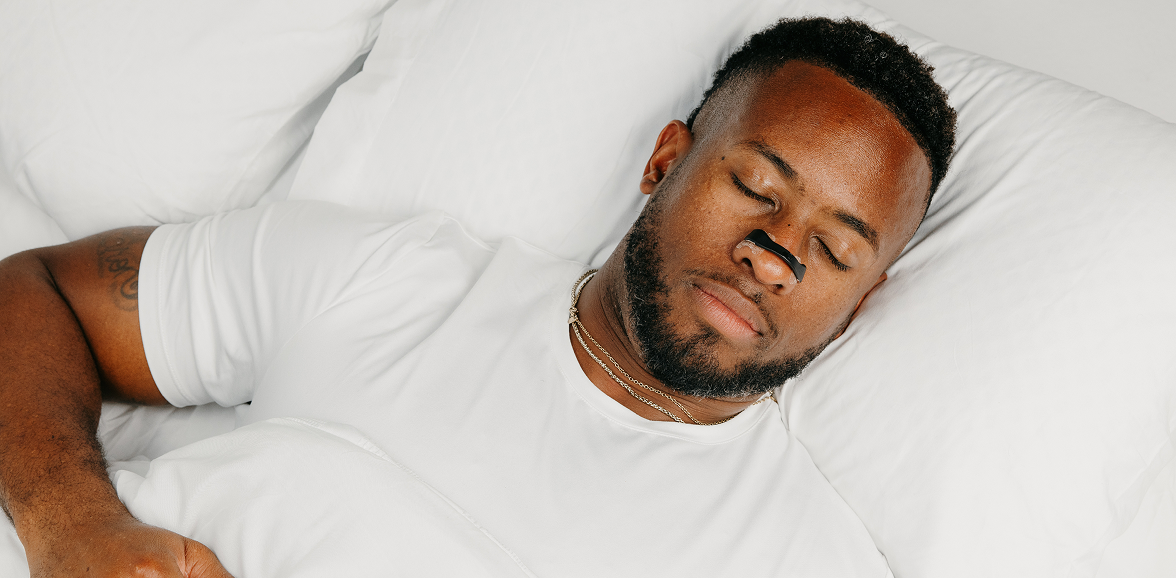
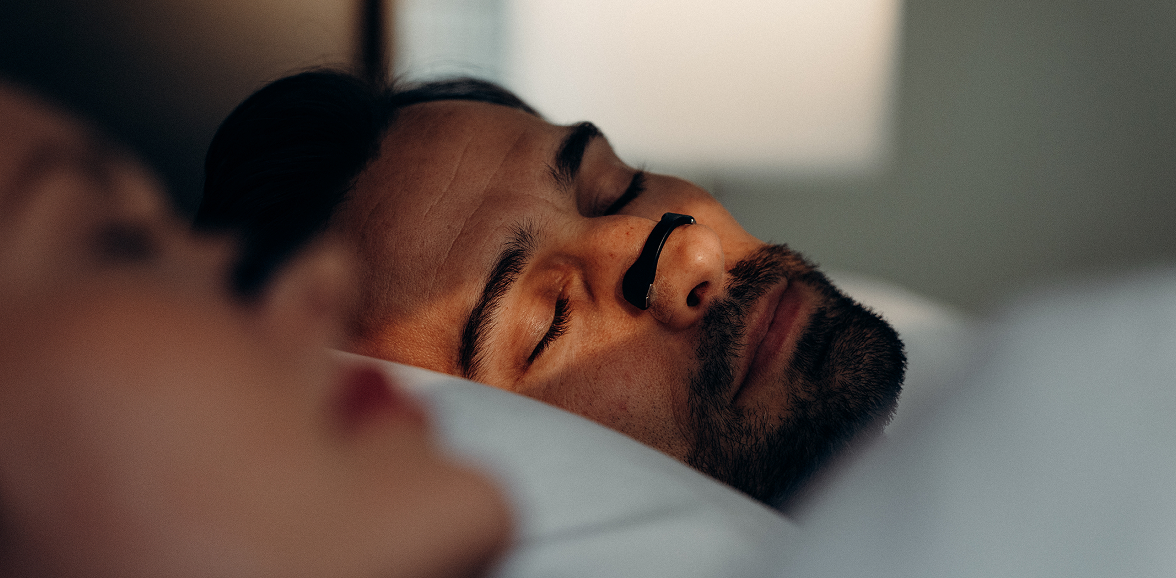
Intake Breathing’s patented two-part magnetic system is designed to do exactly that. Two adhesive Tabs attach to the sides of each nostril — right at the nasal valve where airway restriction actually occurs. A reusable magnetic Band snaps to steel discs in the Tabs, gently pulling the nostril walls outward and maintaining that opening throughout the night. No spring mechanism to collapse. No bridge adhesive to fail in moisture or heat.
Unlike traditional nasal strips that rely on bridge adhesion and spring tension — both of which degrade under the exact conditions of allergy season sleep — Intake’s magnetic hold stays in place through movement, warmth, and moisture. It was originally designed for athletes, which means it was built for conditions far more demanding than sleep.
In an independent SleepScore Labs study of 840+ nights, Intake users reported a 41% reduction in perceived nasal congestion and woke up feeling well-rested more than twice as often. 96% said it was easier to breathe through their nose from the very first night.

Put It Together
You don’t need to implement all seven perfectly. But layering even a few of them — a pre-bed shower, cleaner bedroom air, and a nasal passage that stays open through the night — can genuinely change what allergy season feels like.
Six weeks of real sleep versus six weeks of broken sleep is a meaningful difference in energy, focus, and how you move through every day of spring. You have more control over it than allergy season wants you to believe.
The Intake Starter Kit includes four reusable relief bands in every size plus enough Tabs to find your perfect fit fast. Drug-free, sweat-resistant, and built to hold all night — every night of allergy season.